
What is a mommy makeover? A complete guide
A mommy makeover combines cosmetic procedures, usually on the breasts and abdomen, into a single operation meant to restore your shape from before pregnancy. There is no standard version of it. Most plans draw from a tummy tuck, breast augmentation or lift, and liposuction, and which ones you actually need comes down to your own anatomy and what you want changed.
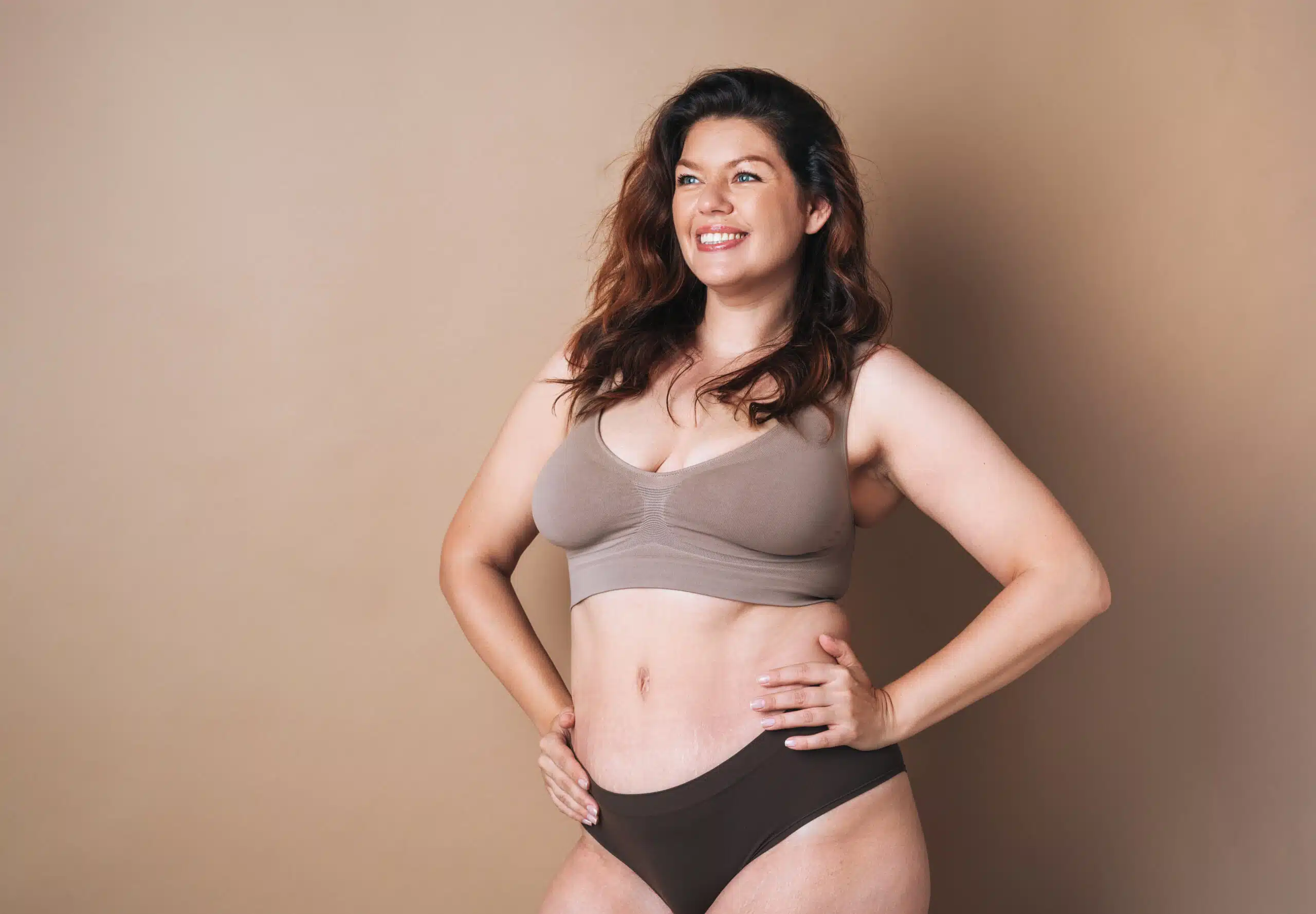
Pregnancy and breastfeeding reshape the body in ways diet and exercise often cannot fully reverse. Skin stretches and does not fully retract, sometimes leaving stretch marks. The connective tissue between the abdominal muscles can stretch during pregnancy, a condition called diastasis recti. It sometimes improves on its own after pregnancy, though for many women the separation persists. Breasts lose volume, or shift position, once nursing ends. Treating each of those changes on its own means several separate surgeries. A mommy makeover addresses the body as a whole instead.
What is a mommy makeover?
A mommy makeover is a combination of cosmetic surgery procedures, usually involving the breasts and abdomen, performed in a single operation to restore a patient’s pre-pregnancy shape. The term names a category, not one standardized surgery. Components are typically drawn from tummy tuck, breast augmentation, breast lift, and liposuction, with each plan built around individual anatomy and goals.
Two patients can have a mommy makeover at the same practice and share almost none of the same surgery.
Which procedures get combined, and how far each one goes, is what decides whether a result looks balanced or looks obviously operated on. Dr. Tehrani plans for proportion.
“Safety is the most important thing when I’m deciding how far to take a combination of procedures,” Dr. Tehrani says. “I limit anesthesia time to six hours, because the risk increases meaningfully after that. Beyond that, it comes down to whether the procedures actually benefit the patient, whether they work together to enhance the body, and whether all of it can be done safely within that window.”
Curious what your own plan might include? Schedule a consultation with Dr. Tehrani.
Who are the best candidates for mommy makeover surgery?
The best candidates for mommy makeover surgery are finished giving birth, at or near a stable weight, and in good general health with no uncontrolled medical conditions. They have persistent physical changes from pregnancy, such as loose abdominal skin, muscle separation, or lost breast volume, that have not resolved with time.
In practice, the surgery usually makes sense for patients who:
- Are finished having children, since a future pregnancy or significant weight gain can reverse the results
- Are at or near a stable weight, following a healthy diet rather than an active weight loss plan
- Have changes from pregnancy that time alone has not corrected
- Are non-smokers, or willing to stop several weeks before surgery and stay off after it. Smoking interferes with healing, so this one is not negotiable
- Are in good general health, with no uncontrolled medical conditions
Having had children is not strictly a requirement. The surgery treats the physical changes of pregnancy, and some patients pursue the same combination after significant weight loss or age-related change. It just goes by a different name then.
Not sure where you fall on this list? See if you’re a candidate for a mommy makeover.
What are the most common mommy makeover procedures?
The most common mommy makeover procedures are the tummy tuck, breast augmentation, breast lift, and liposuction. Most patients receive two or three of them together rather than all four, and the specific plan depends on anatomy and goals.
A board certified plastic surgeon recommends a combination based on what your body needs, not off a standard menu. Not every plan includes everything below.
Tummy tuck (abdominoplasty)
Removes excess, stretched skin from the lower abdomen and tightens the abdominal muscles, which frequently separate during pregnancy. That separation has a name, diastasis recti, and it is the reason this procedure shows up in more plans than any other. Core workouts do not close it, which surprises a lot of patients who have spent months trying. Learn more about our tummy tuck approach.
Breast augmentation, reduction, and fat transfer
Most breast changes after pregnancy call for augmentation, adding volume with silicone or saline implants for patients whose breasts have lost fullness after breastfeeding. Implant selection is a question of proportion, not size alone. Explore breast augmentation options, including Motiva and Preservé implants.
Some patients need the opposite. A breast reduction suits women whose breasts feel disproportionately large or heavy after pregnancy. Others prefer fat transfer, which uses liposuctioned fat from another area to add modest volume without an implant. Which approach fits depends on your own tissue and what you want.
Breast lift (mastopexy)
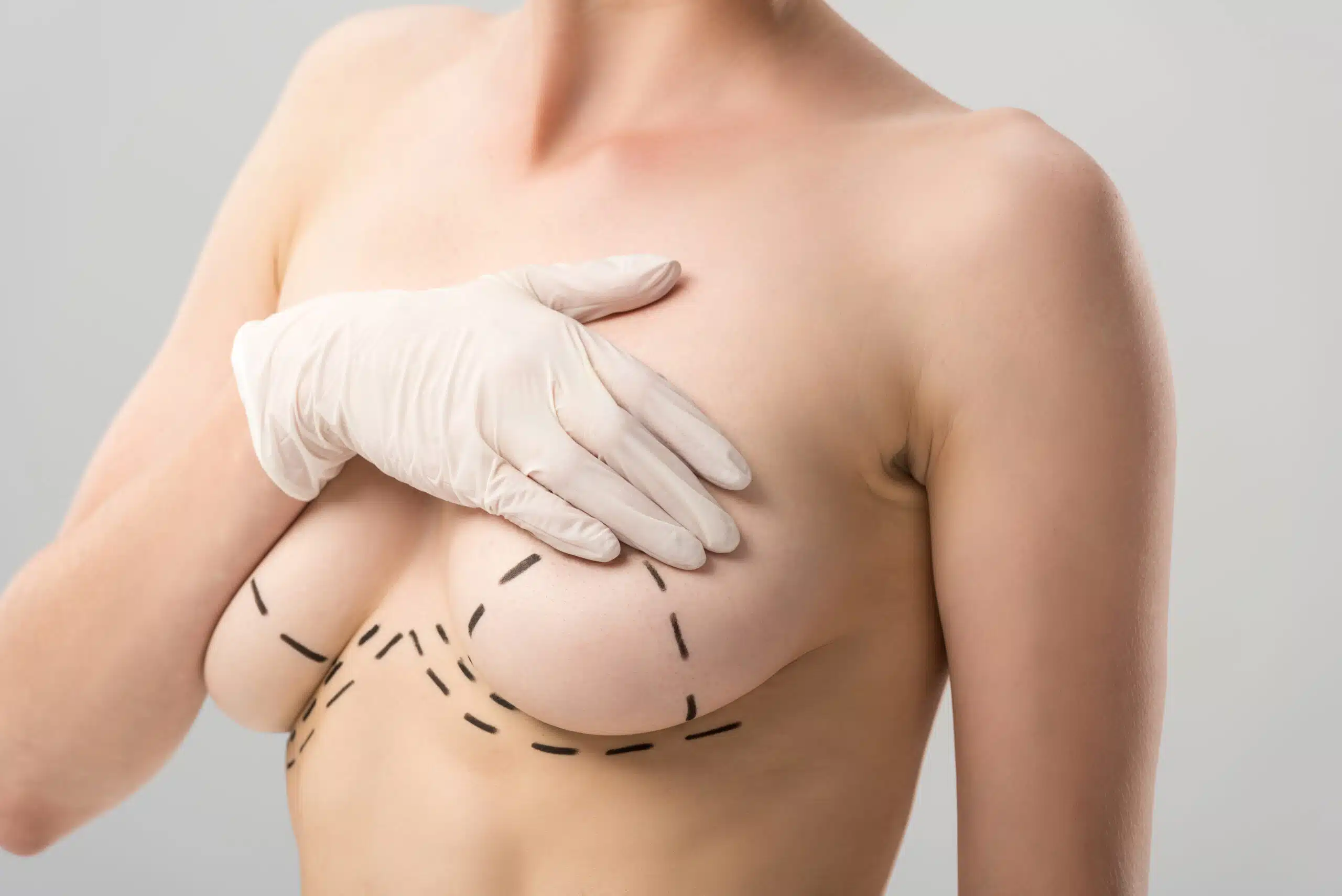
A breast lift repositions breast tissue and removes excess skin to correct sagging breasts, without necessarily adding volume. When a patient has lost both fullness and position, it is often paired with augmentation, a combination sometimes called an augmentation-mastopexy.
See our breast lift page to learn more.
Liposuction and body contouring surgery
Liposuction refines stubborn fat deposits that have not responded to diet and exercise, commonly at the flanks, waist, inner thighs, and upper arms. As body contouring surgery it usually plays a supporting role, sharpening the result of the tummy tuck rather than reducing weight. It works best on patients already near their goal weight, so candidacy and timing tend to get discussed together.
Beyond the common procedures
Some patients also include a Brazilian Butt Lift, a mini tummy tuck for those with minimal muscle separation, or vaginal rejuvenation. These sit outside what most patients receive. A cosmetic surgeon will only recommend them when goals and anatomy line up.
What does a mommy makeover not do?
A mommy makeover is not weight loss surgery. Liposuction and tummy tucks address localized fat and extra skin, not overall body fat, which is why most surgeons prefer patients close to their goal weight beforehand. It is also not a fast change: recovery runs several weeks and the final result settles over months.
Weight is the point patients most often get wrong. After surgery, the scale usually reads about the same. What changes is the shape.
And because the name describes a category rather than a set menu, two patients can leave the same practice with entirely different surgical plans and both be well served.
Why does a cosmetic surgeon combine procedures into one surgery?
A cosmetic surgeon combines multiple procedures because one operation means one recovery period, one exposure to general anesthesia instead of two or three, and facility and anesthesia fees paid once instead of per surgery. Combining also improves the aesthetic result, since the surgeon can balance the breasts and abdomen against each other rather than adjusting one area in isolation.
The tradeoff is a longer single surgery upfront. Broken out, the advantages are:
- One recovery period instead of several
- One exposure to general anesthesia instead of two or three
- Facility and anesthesia fees shared across procedures instead of paid each time
- Better coordination between the breasts and the abdominal area
Combining procedures isn’t automatically safer for every patient, though. It creates a longer, more complex operation, and research on combined abdominoplasty and breast surgery specifically has shown mixed results on complication rates. What matters is whether a patient is a good candidate for a longer combined procedure in the first place, something a surgeon evaluates based on health history, anticipated operative time, and clotting risk, not a blanket assumption that combining is always the better choice.
That last point about coordination matters more than it sounds. Proportion is what makes a result read as natural, and designing the silhouette in one sitting is easier than trying to match it later.
What happens at a consultation with a plastic surgeon?
A mommy makeover consultation with a plastic surgeon includes a review of your pregnancy and surgical history, a physical exam assessing skin laxity, muscle separation, and breast position, and a conversation about your goals. Dr. Tehrani then recommends a specific combination of procedures with the reasoning behind each one, including how each is typically performed. Timing, recovery, an itemized quote, and financing options come after that.
Expect to hear what a procedure cannot change as well as what it can. That part of the conversation is more useful than it feels at the time.
“I recommend patients wait to have an abdominoplasty (tummy tuck) until they’re finished having children,” Dr. Tehrani says. “The other factor is weight. For patients who are morbidly obese (Class 3 obesity), it’s best to lose weight before surgery. Ideally, I want a patient within about ten pounds of their goal weight beforehand.”
Many patients arrive uncertain about what they want, or whether they want surgery at all. That is a normal place to start, and working through it is part of the process. Discretion is standard at every stage of care.
Ready to see what a personalized plan looks like? Book your consultation today.
How long does mommy makeover recovery take?
Most mommy makeover patients take two to four weeks away from work. Restrictions on heavy lifting and strenuous activity run to six weeks or longer, though light walking starts within the first few weeks. Swelling resolves gradually and the final result continues to settle over several months.
How long any of this takes depends on the combination. A tummy tuck lengthens recovery considerably more than liposuction alone.
Sort out childcare, work coverage, and help with lifting before the surgery date. Doing it after is much harder.
Is a mommy makeover the right cosmetic surgery for you?
A mommy makeover suits patients with specific, persistent changes from pregnancy who have finished growing their family and are in good health. It is generally not the right choice for patients planning more children, still losing significant weight, or hoping for weight loss rather than a reshaped contour. Confirming candidacy takes a consultation with a board certified plastic surgeon.
Skin quality, the degree of muscle separation, and breast position all factor in, and none of them can be assessed from a description. There is also the question of what you want to feel in your own body afterward, which for many patients has as much to do with confidence as with appearance.
“Patients often come in wanting their pre-baby body back, but in consultation we usually end up talking about improvements beyond what they looked like before pregnancy,” Dr. Tehrani says.” In general, it’s about a feeling of control, and feeling good about yourself the way you did before having children.”
Dr. Tehrani is a Fellow of the American College of Surgeons. He has cared for more than 10,000 patients across two decades in practice, with more than a hundred published works and multiple national awards to his name.
Why choose a mommy makeover in NYC?
At Aristocrat Plastic Surgery & MedAesthetics, a mommy makeover in NYC means access to plastic surgeons board certified by the American Board of Plastic Surgery, operating in accredited facilities, with the depth of experience that comes from performing this specific combination of procedures often. That volume matters for both safety and results. Choosing a provider based in the city also means access to more advanced implant technologies and techniques sooner, since NYC practices are often among the first to adopt them.
Discretion matters here too. Many patients considering a mommy makeover in NYC are balancing visible careers, social circles, or simply a preference for privacy, and a practice built around that expectation handles scheduling, recovery planning, and follow-up care accordingly. At Aristocrat, that standard of care and discretion is available across three locations: Manhattan, Great Neck, and Southampton.
Frequently asked questions
What is the difference between a mommy makeover and a tummy tuck?
A tummy tuck addresses only the abdomen. A mommy makeover usually combines it with breast surgery, and sometimes liposuction as well.
Do I need to be done having children before a mommy makeover?
Generally yes. A future pregnancy can undo both the abdominal and the breast work.
How long does mommy makeover surgery take?
It depends on the combination, complexity, and whether procedures are staged, so your surgeon can give you a specific estimate at consultation. Combined surgeries often run four to six hours as a general range.
Will I need to stop breastfeeding before surgery?
Yes. Surgeons typically recommend waiting until breastfeeding has fully stopped and breasts have had time to settle, though the right timing depends on your body and your surgeon’s assessment.
Can a mommy makeover address extra skin from weight loss instead of pregnancy?
Yes. The same combination of procedures is often used for significant weight loss or age-related changes.
How soon can I return to exercise after a mommy makeover?
Light walking begins early. Strenuous exercise and heavy lifting usually wait six weeks or longer.
The bottom line
A mommy makeover is a combination of procedures chosen for your body, your history, and what you want to change. Which combination that turns out to be is a conversation, not a package, and it is worth having with a cosmetic surgeon whose priority is a result that looks natural rather than obvious.
Considering a mommy makeover in NYC? Schedule your consultation with Dr. Tehrani to discuss which combination of procedures fits your goals.
Explore related procedures:
Or find the location nearest you:
Medical journal references
- Shermak MA. Abdominoplasty with Combined Surgery. Clinics in Plastic Surgery. 2020;47(3):365-377. https://pubmed.ncbi.nlm.nih.gov/32448473/
- Matarasso A, Wallach SG, Rankin M. Combined Breast Surgery and Abdominoplasty: Strategies for Safety and Aesthetic Results. Plastic and Reconstructive Surgery. 2015;135(4):1113-1122. https://pubmed.ncbi.nlm.nih.gov/25919267/
- Toto V, et al. Combined Surgery (“Mommy-Makeover”) Compared to Single Procedures: A Systematic Review and Meta-Analysis. 2023. https://pubmed.ncbi.nlm.nih.gov/37612475/
- Winocour J, et al. Morbidity in Combined-Procedure Associating Abdominoplasty and Breast Surgery: A Systematic Review. Plastic and Reconstructive Surgery. 2016;137(3):521e-531e. https://pubmed.ncbi.nlm.nih.gov/26321307/
- Nahas FX, et al. Management Strategies for Diastasis Recti. Seminars in Plastic Surgery. 2018;32(3):147-154. https://pubmed.ncbi.nlm.nih.gov/30046291/